General Studies
Mathematics, science, history, and English language arts develop analytical thinking, careful study, and clear expression.
Grades 6 through 8
A rigorous academic program that develops strong reasoning, sustained study, and readiness for the next stage of education—alongside Hebrew, Jewish learning, and a meaningful connection to Israel.
Visit Middle School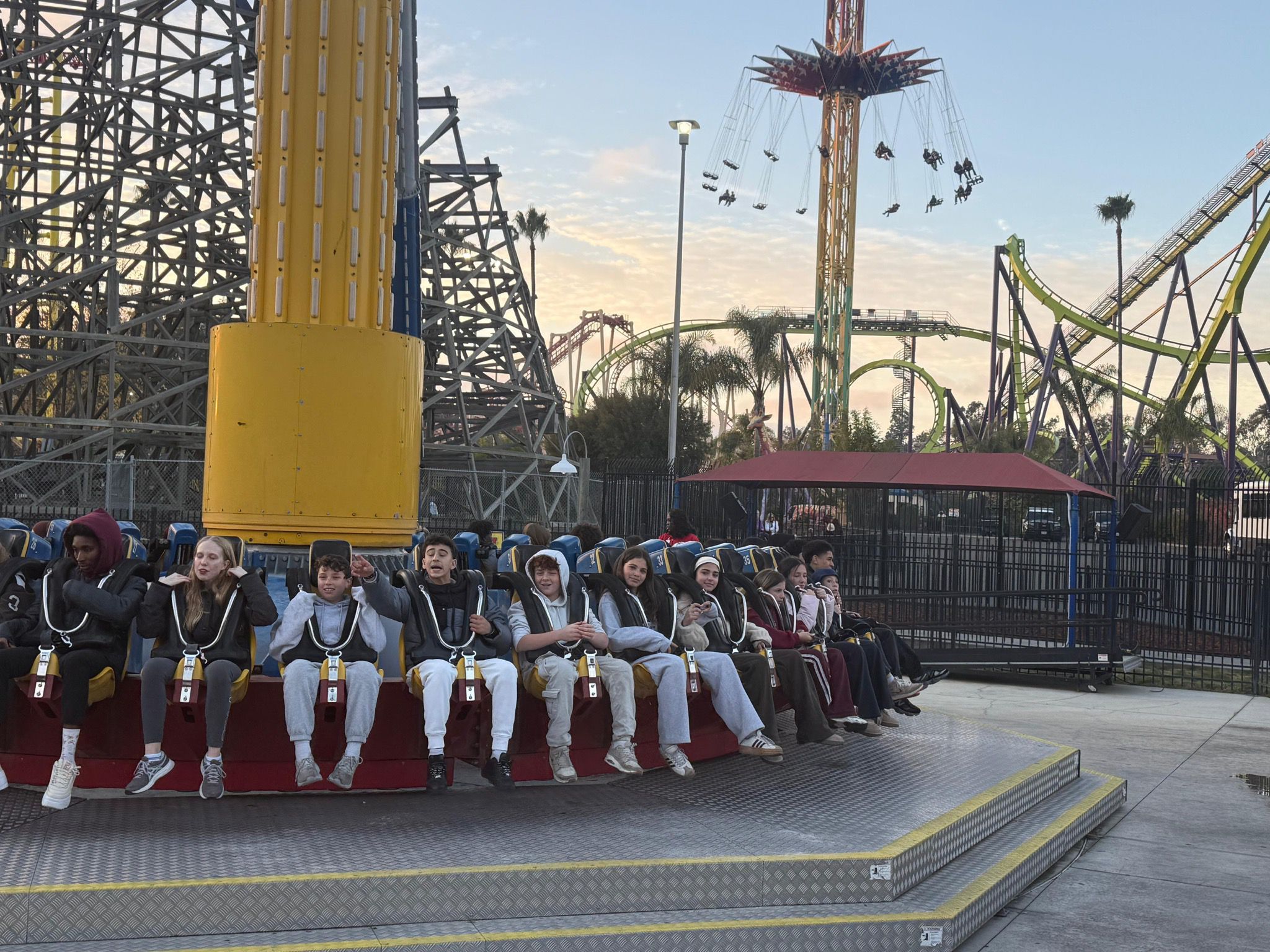
Middle School asks students to bring greater precision, independence, and depth to their work. Academic study connects careful reasoning, increasingly complex texts, and the ability to communicate clearly.
General Studies, Hebrew, and Jewish Studies are taught each day. Specialist learning and a wider school experience round out a purposeful education.
Mathematics, science, history, and English language arts develop analytical thinking, careful study, and clear expression.
Two tracks serve native Hebrew speakers and students learning Hebrew as an additional language. Materials from Israel connect language with culture.
Advanced Chumash and Navi study and an introduction to Talmud strengthen textual analysis, ethical reflection, and reasoning.
Students explore Chumash and Navi with classical commentaries, and encounter the reasoning and debate of Talmud. Hebrew study develops the language skills to read, discuss, and communicate with confidence.
Students also research and help lead commemorations and celebrations connected to Israel, bringing language, learning, and responsibility together.
Hebrew, holidays, and the weekly Torah portion, along with specials, learning support, enrichment, advisory, and clubs, are shared across the grades and described on the K–8 Programs page.
Math, science, history, and English language arts.
Our middle school mathematics program follows a clear, traditional sequence designed to build strong foundations and lasting confidence in mathematics. Students may take Math 6, Pre-Algebra, Algebra 1, Geometry, and Algebra 2 during grades 6 through 8, based on readiness and demonstrated progress. Instruction is aligned with Common Core standards and is anchored in the well-established Dolciani, Larson, and Jurgensen textbook series, long respected for their clarity, rigor, and logical progression.
Classes emphasize careful reasoning, accuracy, and long-term understanding through direct instruction and consistent practice. Students are taught high-level study skills, including how to organize their work, analyze mistakes, and prepare thoughtfully for assessments. Regular opportunities for reflection help students become more aware of how they learn, strengthen problem-solving strategies, and develop confidence as they take increasing responsibility for their academic growth.
Middle School Science uses the Center For Jewish Initiatives (CIJE) Science Curriculum. Students are prepared for high school and beyond through hands-on experiences, use of engineering practices, projects that involve problem solving, and learning the importance of notetaking skills.
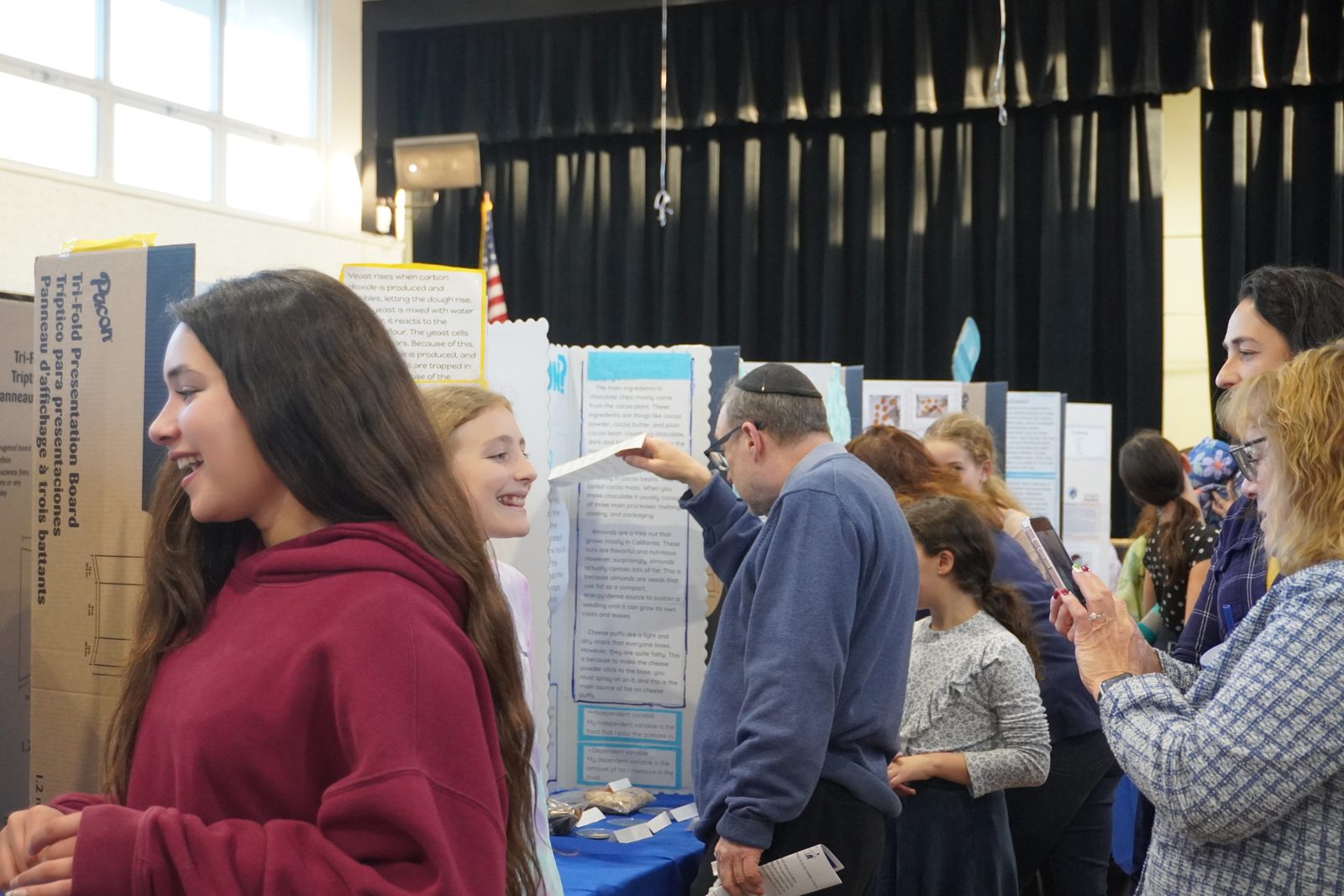
Students participate in a Science Fair each school year. They choose a topic that is of interest to them and build a science experiment that will answer the question they have about that particular topic. Each student creates a visual representation that leads the audience through the entire process of their project, including results and next steps.
Middle school history follows the California Content Standards whereby students will study ancient civilizations, world history, and United States history. We use published material from Houghton Mifflin and Pearson, as well as additional primary and secondary sources. As students study history across time and place they begin to identify patterns and compare and contrast what made some civilizations endure longer than others.
Students read complete and adapted versions of classic literature as presented from Amplify’s Core Knowledge Language Arts (CKLA) curriculum. For example, a novel study of Summer of the Mariposas is connected to an adapted excerpt from Homer’s The Odyssey. Reading is made accessible whether it’s already tailored for a middle school audience (e.g. pieces of Edgar Allan Poe’s poetry) and/or the teacher may further differentiate readings and materials in a customized manner. By engaging with real-world literature, students enter into thoughtful and analytical discussions about character development, literary tropes, recurring themes, symbolism, and author commentary.
Middle school writing is linked to the reading material in English and History. Students’ essays respond to text or defend a position with thoughtful reasons. Writing follows Modern Language Association (MLA) formatting, complete with source documents cited.
Classical texts, Talmud, and the foundations of Jewish belief and identity.
Students continue to sharpen their skills in Chumash and Navi, moving into in-depth study of classical commentaries such as Rashi and Ramban. The focus shifts toward understanding the nuance of the Hebrew text and extracting meaningful ethical lessons.
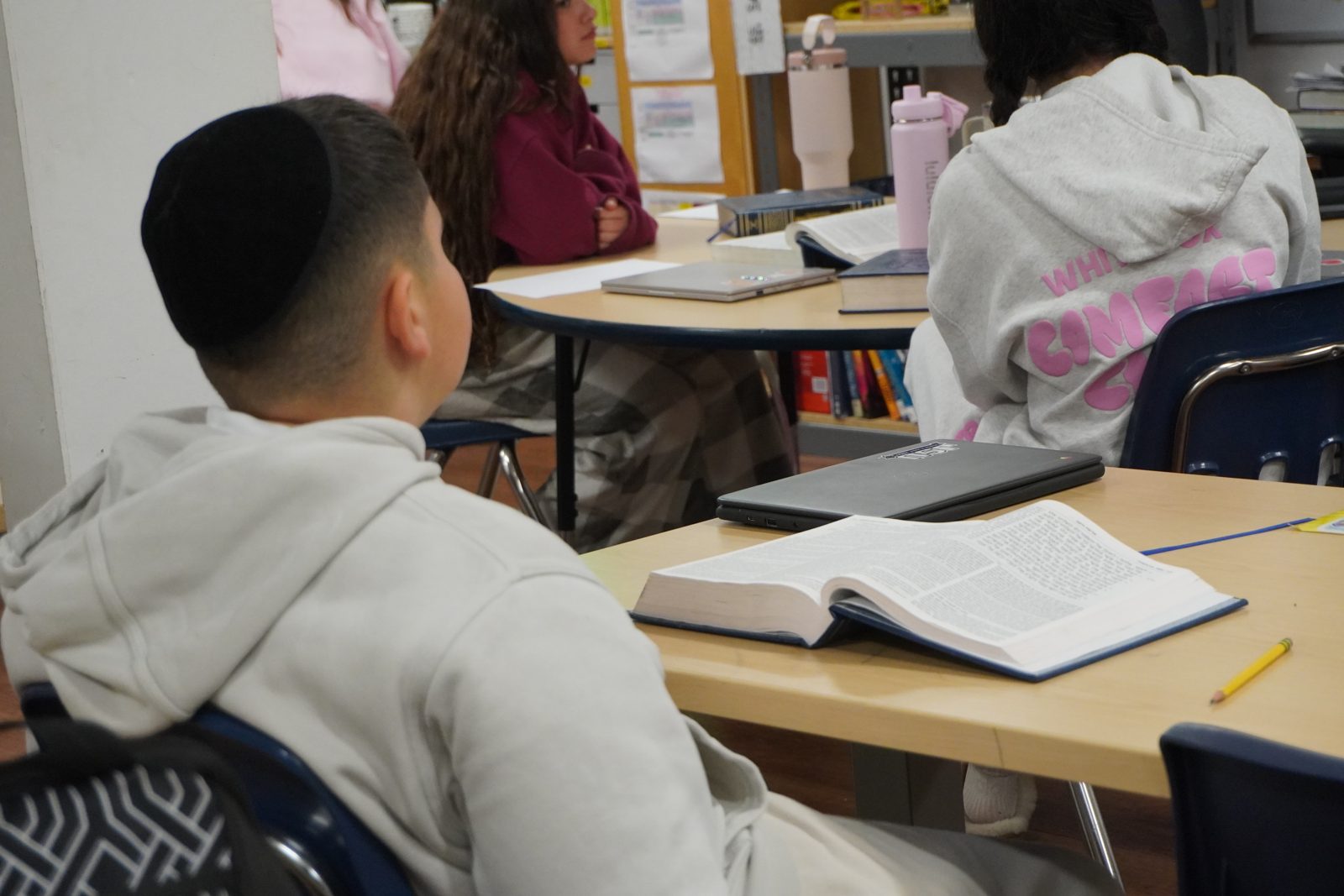
This stage marks the introduction of Talmud, where students learn the logical structures and legal debates of the Oral Torah. This discipline helps students develop analytical reasoning skills and understand the processes by which Halacha (Jewish Law) is determined.
This program focuses on the core pillars of Jewish belief and practice, including the philosophy of Mitzvot, the significance of Am Yisrael (the Jewish People), and a deep exploration of Eretz Yisrael (the Land of Israel).
This track emphasizes the development of a personal, nuanced Jewish identity, encouraging students to reflect on how these foundational concepts inform their roles as future leaders in the global Jewish community.
Electives and field trips for grades 6–8.
For elective classes, middle school students participate in classes that allow them to learn new skills in Art, Music, Physical Education, STEAM, and Primitive Skills classes. The “wheel” rotation gives the students the opportunity to explore each class for one quarter (approx. 6 weeks). For the fourth quarter, students choose an elective class to revisit, thus affording them the additional time to complete a more in-depth project.
Other exploratory courses in the past have included photography, French, and Life Skills class (sewing, cooking, etc.). Eighth grade students also create their own yearbook in their last year at SPHDS.
Leadership and team-building skills are the focus of a field trip that all middle school students attend together, so the new sixth grade class is able to build a relationship with the older students.
The Primitive Skills Trip to Shaff Ranch is a fun camping trip that students look forward to each spring.
Mr. Shaff’s Primitive Skills class teaches students skills like fire building, woodworking, and flint knapping, which are then showcased on this trip. Students get a real camping experience with tents, campfires, cooking over the campfires, and exploring nature.
Additional middle school field trips are linked to curricular areas of study, and/or may be an extra special excursion for graduating eighth graders.
Hebrew, Chagim, and Parashat HaShavua; music, art, STEAM, physical education, and garden; learning support and academic enrichment; SEL, assemblies, advisory, clubs, and sports.
The math sequence runs from Math 6 through Pre-Algebra, Algebra 1, Geometry, and Algebra 2. Placement depends on readiness and demonstrated progress.
Instruction emphasizes logical reasoning, accurate work, consistent practice, and thoughtful preparation. Students learn to review mistakes and take greater responsibility for how they study.
Course offerings can vary by year, and not every student takes every course.
Life in Middle School
Electives and field trips create opportunities to pursue interests and connect learning with the wider world.
Advisory and school life provide space to develop independence, relationships, and responsibility.
Student Services works with teachers and families to understand learning needs and plan targeted support.
Bring your questions about math placement and the move to high school.